
Hospitals are among the most sensitive buildings when it comes to fire safety. Unlike ordinary commercial buildings, hospitals may have patients who cannot walk, people connected to medical equipment, oxygen and other medical gases, electrical equipment operating continuously, kitchens, laboratories, pharmacies, storage rooms, and large numbers of visitors and staff.
Because of these conditions, having fire protection equipment installed is not enough. Regular inspection, testing, maintenance, staff awareness, and emergency planning are equally important. A fire alarm that has not been tested, an obstructed exit, a damaged emergency light, or an unavailable fire extinguisher can create serious problems when an emergency occurs.
In Pakistan, hospital owners and facility managers should consider applicable building and fire-safety requirements as well as the recommendations of qualified fire-protection professionals. The Pakistan Engineering Council’s Building Code of Pakistan Fire Safety Provisions 2016 provides a national reference for fire prevention, life safety, fire protection, and related maintenance considerations.
This guide explains important hospital fire-safety maintenance practices and why they should never be ignored.
Why Hospital Fire Safety Maintenance Matters
Fire safety is not a one-time installation. Fire alarms, detectors, emergency lighting, extinguishers, hydrants, pumps, sprinkler systems, exit signs, electrical systems, and other protective equipment need continuing attention.
Hospitals also have a special responsibility because evacuation can be more complicated than in many other buildings. A patient may need assistance from several staff members, while some areas may have equipment or procedures that cannot simply be stopped immediately.
The goal of maintenance is therefore simple: make sure safety systems are ready before they are needed.
A properly maintained system can help detect a fire early, alert occupants, support an organized response, and give staff more time to move vulnerable people toward safety.
1. Inspect the Fire Alarm System Regularly
The fire alarm system is one of the most important parts of a hospital’s overall fire-protection strategy. It may include a control panel, smoke detectors, heat detectors, manual call points, sounders, visual notification devices, monitoring equipment, and connections to other building systems.
NFPA 72 includes dedicated provisions covering inspection, testing, and maintenance of fire alarm and signaling systems.
Hospital management should make sure that qualified personnel inspect the system according to the applicable requirements and the equipment manufacturer’s instructions.
Routine attention should include checking for:
- Fault or trouble indications on the control panel
- Damaged detectors or alarm devices
- Obstructed detectors
- Unusual system notifications
- Damaged wiring or visible components
- Problems with backup power
- Manual call points that are blocked or damaged
- Notification appliances that may not be clearly heard or seen
A recurring alarm fault should never simply be silenced and forgotten. Every fault should be investigated and corrected through an appropriate maintenance process.
For organizations looking for professional fire-protection services in Pakistan, Flame Defender provides fire-safety solutions and related services.
2. Keep Smoke and Heat Detectors Clear
Smoke and heat detectors cannot perform properly if they are damaged, covered, contaminated, or obstructed.
Hospital environments can be particularly challenging because construction work, dust, medical activities, renovations, ceiling changes, and ventilation modifications can affect detector performance.
Maintenance teams should check that detectors remain:
- Visible and accessible for inspection
- Free from obvious obstruction
- Properly mounted
- Protected from accidental damage
- Appropriate for their location
- Maintained according to the manufacturer’s instructions
Any renovation or change in room layout should also trigger a review of the existing fire-detection arrangement.
For example, moving walls, installing new ceilings, changing ventilation, or converting a storage room into another type of space may affect how fire detection should be arranged.
3. Test Emergency Power Systems
A hospital cannot depend entirely on normal electrical power. Fire alarms, emergency lighting, communications, medical equipment, and other essential systems may require reliable emergency or standby power.
NFPA identifies emergency and standby power as a critical part of maintaining safety when the normal electrical supply is interrupted.
Hospital maintenance teams should have a documented program for checking emergency power systems. Depending on the installation and applicable requirements, this may involve generators, batteries, transfer equipment, chargers, control systems, and other components.
A useful maintenance program should document:
- Inspection dates
- Test results
- Equipment condition
- Faults discovered
- Corrective actions
- Service dates
- Responsible personnel or contractors
Hospital management should not assume that a generator or backup battery will work simply because it worked during its last test.
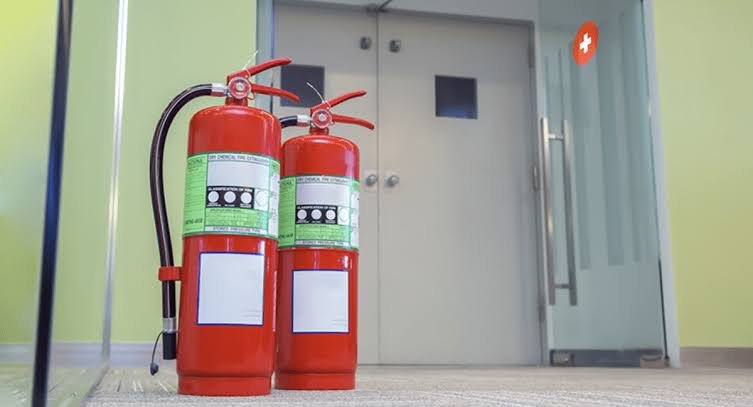
4. Never Ignore Fire Extinguisher Maintenance
Fire extinguishers are often among the most visible pieces of fire-safety equipment in a hospital, but visibility does not guarantee readiness.
Extinguishers should be positioned where they are intended to be available and should not be hidden behind furniture, equipment, supplies, or temporary storage.
Maintenance checks should look for:
- Physical damage
- Corrosion
- Missing or damaged components
- Pressure problems where applicable
- Obstructed access
- Missing identification
- Evidence that the extinguisher has been discharged or tampered with
- Expired or overdue service requirements
The type of extinguisher should also be appropriate for the hazards in the area. A hospital kitchen, electrical room, laboratory, office, and storage area may not present identical fire risks.
Extinguisher inspection and servicing should be handled according to applicable standards, manufacturer instructions, and qualified professional recommendations.
5. Keep Fire Hydrants and Hose Equipment Ready
Hospitals that have internal or external hydrant systems should include them in the maintenance program.
A hydrant system can become less useful if access is blocked, valves are damaged, equipment is missing, or other components have not been maintained.
Facility teams should periodically review:
- Access to hydrants
- Valve condition
- Hose and nozzle condition
- Signage
- Visible damage
- Water-supply arrangements
- Pump-system condition
- Pressure-related concerns identified during professional testing
The exact testing and maintenance schedule should be based on the installed system, applicable requirements, and qualified fire-protection professionals.
6. Maintain Fire Pumps and Water-Based Protection Systems
Where hospitals use fire pumps, sprinklers, standpipes, or other water-based fire-protection systems, these systems require structured maintenance.
A fire pump that has not been properly maintained may fail to provide the expected performance during an emergency.
Maintenance programs should address the complete system rather than focusing only on the pump itself. This can include the water supply, valves, controllers, piping, pressure-related equipment, alarms, and other connected components.
Valves that are unintentionally closed, damaged, inaccessible, or improperly identified can compromise a fire-protection system.
For this reason, fire-protection equipment should not be treated as ordinary building equipment. Qualified personnel should perform testing and servicing appropriate to the system.
7. Check Emergency Exits and Escape Routes
A hospital’s fire-safety plan is incomplete if people cannot reach a safe location.
Emergency exits and escape routes should remain clear and usable. Corridors should not become permanent storage areas, and exit doors should not be blocked by equipment, furniture, boxes, or other materials.
NFPA home and life-safety guidance emphasizes maintaining usable escape routes and planning multiple ways out where possible. In a hospital, evacuation planning is even more important because many occupants may need assistance.
Facility teams should routinely check:
- Corridors
- Stairways
- Exit doors
- Exit signs
- Emergency lighting
- Door operation
- Fire-rated doors
- Areas around emergency exits
If an exit route is changed during renovation, the fire-safety plan should be reviewed rather than assuming the old arrangement still works.
8. Inspect Emergency Lighting and Exit Signs
Smoke, darkness, power failure, and confusion can make evacuation difficult.
Emergency lighting and illuminated exit signs can help people identify routes when normal lighting is unavailable.
Maintenance teams should look for:
- Failed lights
- Damaged signs
- Poor visibility
- Obstructed signs
- Battery problems
- Electrical faults
- Changes to corridors or exits that affect visibility
Exit signs should be easy to identify from relevant areas, and emergency lighting should be maintained according to the installed system’s requirements.
9. Keep Fire Doors in Good Condition
Fire doors are an important part of compartmentation. They can help limit the movement of fire and smoke between areas when properly installed and maintained.
Hospital staff should avoid practices that compromise fire doors, such as:
- Keeping doors permanently wedged open where they are required to close
- Damaging door hardware
- Blocking the door with equipment
- Making unauthorized alterations
- Ignoring damaged seals or other visible problems
Because hospitals often move beds, carts, equipment, and supplies through corridors, fire doors can experience significant wear.
Any damaged fire door should be reported and assessed rather than ignored.
10. Review Electrical Fire Risks
Electrical equipment is essential to modern healthcare, but damaged wiring, overloaded circuits, poor maintenance, unsuitable connections, and defective equipment can create fire hazards.
Hospitals should maintain a planned electrical inspection program appropriate to their facility.
Areas deserving particular attention include:
- Electrical rooms
- Patient-care areas
- Laboratories
- Kitchens
- Laundry areas
- Workshops
- Server and communication rooms
- Generator areas
- Equipment rooms
Temporary electrical connections should not become permanent solutions. Damaged cables, unusual heating, repeated circuit trips, burning smells, or visible electrical damage should be reported promptly to qualified personnel.
11. Pay Attention to Medical Gas Areas
Hospitals may use oxygen and other medical gases as part of patient care. These systems require careful management because oxygen can intensify combustion.
Fire-safety maintenance should therefore be coordinated with the hospital’s medical-gas management procedures.
Storage areas, cylinders, piping systems, signage, and related equipment should be maintained according to applicable requirements and qualified professional guidance.
Staff should also understand the hospital’s procedures for responding to emergencies involving medical gases.
12. Keep Kitchens and Laundry Areas Under Control
Hospital kitchens, laundry rooms, maintenance workshops, and similar areas can contain additional fire hazards.
Cooking equipment can produce heat and grease, while laundry facilities may involve electrical equipment, dryers, lint, and other combustible materials.
Maintenance programs should include appropriate cleaning, equipment inspection, ventilation maintenance, and fire-protection checks.
Grease accumulation, damaged electrical equipment, blocked ventilation, and poor housekeeping should not be treated as minor issues.
13. Maintain Good Housekeeping
Simple housekeeping can make a major difference.
Combustible materials should not accumulate unnecessarily in corridors, stairways, plant rooms, electrical areas, or other locations where they could increase fire risk or obstruct emergency response.
Hospital departments should establish clear responsibilities for:
- Waste removal
- Storage
- Corridor cleanliness
- Equipment placement
- Chemical storage
- Combustible-material control
- Access to fire equipment
A clean and organized hospital is easier to inspect and easier to evacuate.
14. Train Staff and Conduct Fire Drills
Fire equipment is only one part of hospital fire safety. Employees also need to understand what to do when an alarm activates.
Training should be appropriate to each employee’s responsibilities.
For example, clinical staff may need to understand patient movement and departmental emergency procedures, while security staff may have responsibilities involving access control and emergency coordination.
Fire drills can help identify weaknesses before an actual emergency. After a drill, management should review what happened and record areas that require improvement.
Training should also cover basic alarm response, emergency communication, evacuation routes, assembly arrangements, and responsibilities for assisting people who need additional support.
15. Create a Written Maintenance Schedule
A hospital should not depend on memory for fire-safety maintenance.
A written schedule can identify:
| Equipment/Area | Maintenance Focus |
|---|---|
| Fire alarm system | Inspection, testing, faults and corrective action |
| Smoke/heat detectors | Condition, obstruction and functionality |
| Fire extinguishers | Accessibility, condition and servicing |
| Fire pumps | Inspection and performance testing |
| Hydrants | Access, valves, hoses and equipment |
| Emergency lighting | Function and backup power |
| Exit signs | Visibility and operation |
| Fire doors | Condition, hardware and accessibility |
| Generator/backup power | Inspection, testing and records |
| Electrical systems | Inspection and defect correction |
| Escape routes | Clear access and signage |
The actual frequency should follow applicable codes, manufacturer instructions, system specifications, and advice from qualified professionals rather than applying one generic schedule to every hospital.
NFPA 99 identifies healthcare facility professionals and facility managers among those responsible for the safe operation and maintenance of critical healthcare systems, reflecting the specialized nature of healthcare environments.
16. Keep Detailed Maintenance Records
Documentation is an important part of a hospital fire-safety program.
Records can help facility managers identify repeated faults, confirm that maintenance was completed, track service history, and demonstrate that corrective actions were taken.
A useful record can include:
- Date of inspection
- Equipment inspected
- Findings
- Faults identified
- Corrective action
- Replacement parts
- Contractor or technician
- Date of follow-up
- Final status
If the same detector, alarm circuit, emergency light, or other component repeatedly develops problems, the records can help management recognize a pattern.
17. Do Not Delay Repairs
One of the most important maintenance principles is simple: a known fire-safety problem should not be allowed to become a permanent problem.
If an inspection identifies a defective component, blocked exit, damaged fire door, alarm fault, or emergency-lighting problem, it should be assigned to a responsible person and followed through until resolved.
Where a critical safety system is temporarily impaired, hospital management should use an appropriate impairment-management process and consider additional temporary precautions based on professional advice and applicable requirements.
The objective is not simply to complete an inspection. The objective is to keep the hospital’s fire-protection system dependable.
18. Review Fire Safety After Renovations
Hospitals frequently change.
New wards may be added, rooms may be converted, departments may move, ceilings may be replaced, equipment may be installed, and electrical systems may be modified.
Every significant building or system change should prompt a fire-safety review.
A new room layout can affect detector coverage. A new wall can affect compartmentation. A modified electrical installation can change fire risk. A changed corridor can affect evacuation.
Fire safety should therefore be considered during renovation planning rather than only after construction is finished.
Fire Alarm System in Pakistan: Why Professional Maintenance Matters
A modern Fire alarm system in Pakistan can provide an important layer of protection for hospitals, but its effectiveness depends on correct installation, regular inspection, testing, maintenance, and prompt fault correction.
Pakistan Engineering Council’s professional registration information includes a specialization for installation, commissioning, and maintenance of fire detection, alarm and suppression systems and allied equipment.
Hospital management should therefore work with appropriately qualified professionals when specialized inspection, testing, servicing, or repairs are required.
The exact requirements can vary according to the hospital’s size, occupancy, installed systems, local authority requirements, applicable codes, and equipment specifications.
A Simple Hospital Fire-Safety Maintenance Checklist
Hospital management can use the following checklist as a starting point:
- Check the fire alarm panel for faults.
- Ensure detectors and alarm devices are not obstructed.
- Maintain fire extinguishers and keep access clear.
- Inspect hydrants and associated equipment.
- Maintain fire pumps and water-based systems.
- Keep emergency exits clear.
- Check emergency lighting and exit signs.
- Inspect fire doors.
- Review electrical fire hazards.
- Maintain emergency power systems.
- Keep medical-gas areas properly managed.
- Maintain kitchen and laundry fire-safety measures.
- Keep combustible storage under control.
- Train staff regularly.
- Conduct appropriate fire drills.
- Record inspections and corrective actions.
- Review fire safety after renovations.
- Arrange professional testing and servicing when required.
Conclusion
Hospital fire safety requires continuous attention. A fire alarm system, extinguisher, emergency light, fire pump, exit door, or generator is only useful when it is properly maintained and ready to perform its intended function.
For hospitals in Pakistan, a strong maintenance program should combine regular inspections, professional testing, staff training, good housekeeping, emergency planning, accurate records, and prompt correction of defects.
Most importantly, fire safety should be treated as an ongoing responsibility rather than a checklist completed once a year. Hospitals protect people who may have limited ability to respond independently, making reliable fire protection especially important.
A properly planned Fire alarm system in Pakistan, supported by professional maintenance and a broader fire-safety program, can form an important part of a hospital’s strategy for protecting patients, staff, visitors, equipment, and critical services.
For professional fire-safety solutions and support, visit Flame Defender.
Frequently Asked Questions
1. Why is fire-safety maintenance especially important in hospitals?
Hospitals contain vulnerable patients, medical equipment, electrical systems, medical gases, kitchens, laboratories, and many other potential hazards. Some patients may also require assistance during evacuation. Regular maintenance helps ensure that fire-protection and life-safety systems remain ready when needed.
2. How often should a hospital fire alarm system be tested?
There is no single frequency that applies to every hospital system. Testing should follow applicable requirements, the installed system’s specifications, manufacturer instructions, and qualified fire-protection professionals. A documented inspection and testing program should be maintained.
3. What should hospital staff do when they find a fire-safety defect?
The defect should be reported immediately through the hospital’s established safety procedure. Critical problems should be assessed promptly, appropriate temporary precautions should be considered, and the repair should be tracked until the problem has been resolved.
4. Does a hospital need more than a fire alarm system?
Yes. A fire alarm is one part of a broader fire and life-safety strategy. Depending on the facility, protection may also involve extinguishers, emergency lighting, exit signs, fire doors, hydrants, pumps, sprinklers, emergency power, evacuation procedures, staff training, and other systems.
5. Who should maintain a hospital fire alarm system in Pakistan?
Routine checks may involve trained facility personnel, while specialized inspection, testing, commissioning, and repair should be performed by appropriately qualified professionals. Pakistan Engineering Council’s registration information specifically recognizes installation, commissioning, and maintenance of fire detection, alarm and suppression systems as a professional specialization.